
Ball libraries for happier, healthier communities
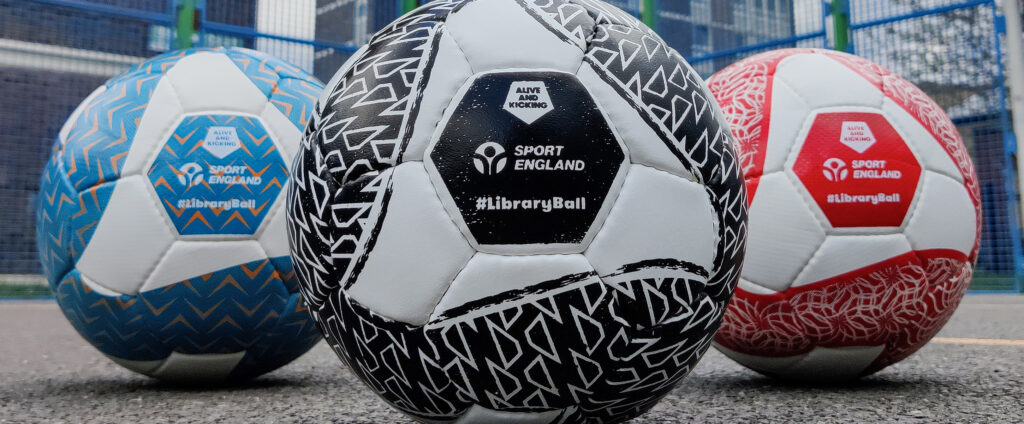
Since June 2020 Alive and Kicking, with the support of Sport England, Better, and the Postcode Lottery Trust, has been running an England-wide ‘ball library’. The idea is for young people to borrow a football, play with it, then bring it back. There’s no cost and minimal monitoring by the ‘libraries’, making it an exercise in mutual trust that not only helps people to access equipment they may not be able to otherwise but forges stronger links between individuals and communities.
Why are the ball libraries important? First and most obviously, physical activity and play are both vital to your health and happiness. There is a discrepancy in access to sport in the UK which has been worsened by COVID, which in turn means there is a widening gap in mental and physical health, self-esteem and confidence, and time spent outside and independently playing with peers (see Sport England’s Active Lives surveys 2020-21).
To help tackle this, our libraries aim to minimise barriers to play. They’re free to use and encouraging participants to take part on their own terms. We’re delighted to report that this has enabled us to bring football to those who likely would not have access otherwise: over 80% of participants live in the top third of the most deprived local neighbourhoods. As we learned from the drop in physical activity and overall happiness levels over the early pandemic when schools were closed – resulting in a compounded version of ‘the holiday gap’, when young people from lower socio-economic backgrounds are significantly less able to partake in sport and more likely to experience social isolation, and in turn to suffer low mental and physical health – it is absolutely vital to reduce barriers to active, social play.
Another outcome is that the ball libraries make people more aware of, and more inclined to use, other services provided by the spaces they are hosted in. Right now these include libraries of the more traditional kind, youth and community centres, and various charity and council spaces. Demographics who are less able, encouraged, or otherwise likely to access sport (notably those from lower socioeconomic backgrounds and certain ethnic groups) frequently face similar barriers to formal services such as these and often actively distrust them, so anything that brings local people into the space and helps build confidence is welcome. On top of this, participants naturally spend more time in local pitches, playgrounds, and parks as they play – all green spaces shown to be linked to better mental and physical health (see Public Health England’s report Improving Access to Greenspace).
Data gathering at the ball libraries is minimal, partly to prevent participants being turned off by the faff of answering lots of questions, but also to avoid what may be perceived as intrusive tracking or surveillance. However, based on the strands of demographic data we do have, many of our participants likely fall along the intersection of those groups most likely to face social discrimination and lack of care even from supposedly custodial figures such as police officers and school staff. 29% are Black (compared to the national figure of 3.3%), 71% male, and as mentioned previously 80% come from less affluent neighbourhoods. Indeed, we have received feedback that the young people borrowing our footballs are often pleasantly surprised that the ball library is free and largely unmonitored, indicating that in their experience this is unusual.
At time of writing our ball loss rate is at just 1%, proving our confidence is well-placed. We hope that our ball libraries can demonstrate the potential of programmes which place trust in those often denied it – like the Aberdeen-based initiative #YesBallGames, which we were excited to partner with last year.
If you are involved with a community organisation in a space you think might be right for the ball library programme, we’d love to hear from you. Please get in touch here!