Alive and Kicking

Sport has nolimits.Neither do they.

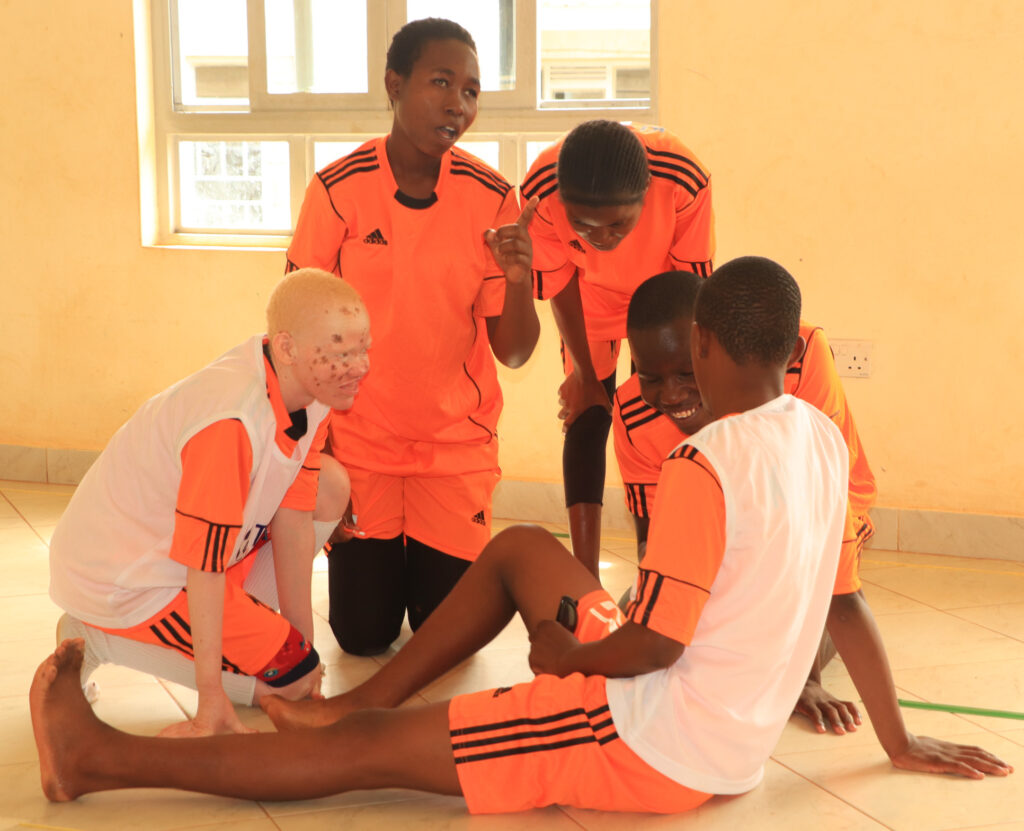
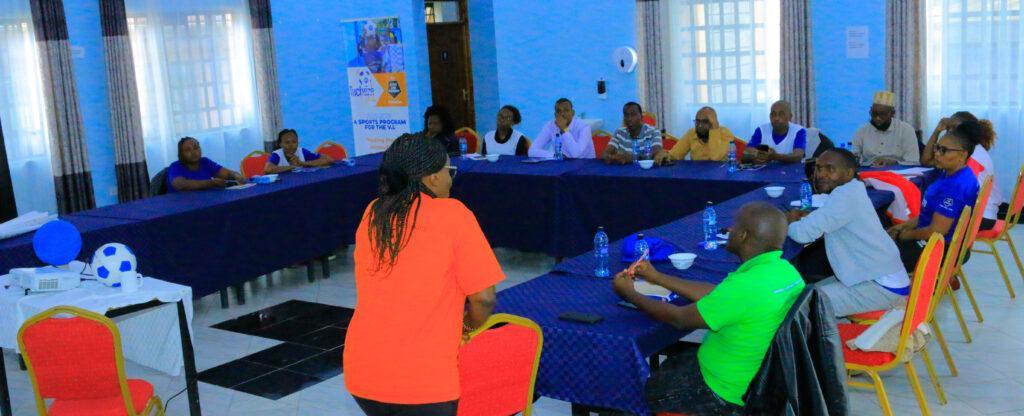
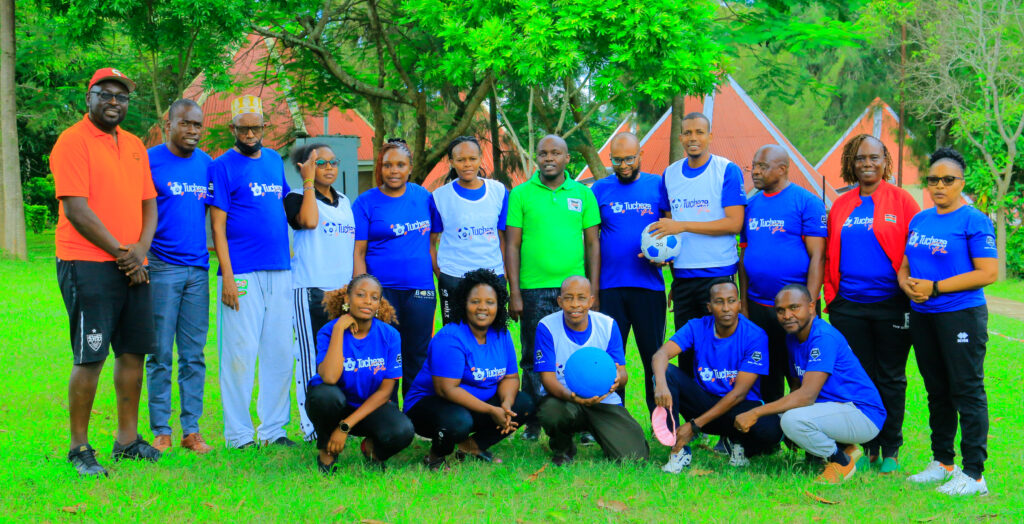
How one program, one bold idea, and the right support transformed inclusive sports education across Kenya — reaching over 5,000 visually impaired learners. You cannot change what happens on the field without first changing what happens in the staffroom. That was the insight at the core of Alive and Kicking’s approach — and it’s where the O365 Innovation Hub’s support made its most immediate mark. With access to specialized pedagogical frameworks and tailored training toolkits, the program upskilled 81 VI sports teachers across Kenya’s target schools. These weren’t generic workshops. They were tools built for the specific challenge of teaching sport to visually impaired young people — giving educators the confidence, language, and methods to do something most had never been formally trained to do. Those 81 teachers became a multiplier. Each one stepped back into their school carrying new skills — and through them, more than 5,000 visually impaired learners gained access to quality, inclusive sports education. Individual programs fade. Institutions endure. The O365 Innovation Hub understood this — and so did Alive and Kicking. A key goal of this partnership was not just to run a good program, but to embed it into structures larger than any single organisation. By strengthening ties with implementing partner KESAVI and the Ministry of Education, Alive and Kicking moved from a standalone initiative to a recognised part of Kenya’s educational fabric. That unified front opened the door to participation in the Special Needs Education (SNE) national ball games — bringing inclusive sport in front of a national audience for the first time. The ripple effects extended well beyond schools. When the International Olympic Committee delegation visited, they weren’t just witnessing a project — they were seeing a model. Enhanced media coverage and stronger storytelling gave Alive and Kicking the language to carry that message further, to audiences who could amplify, fund, and replicate it. Inside the organisation, the support translated into something equally vital: stable employment and high staff retention. Sustainability isn’t only about programmes — it’s about people. Make. Play. Live

Sport has nolimits.Neither do they. Read More »
From Theory Lessons to Real Play

“Instead of just talking about sports, we are now using our daily coaching sessions to introduce learners to the official rules — and the games have become far more engaging and enjoyable for everyone.” There was a time when the sports field was a place of frustration. Before the introduction of the Tucheze Pia program, Salvation Army Likoni High School for the Visually Impaired was seriously under-equipped. Teachers and students made do with substandard balls, and sports sessions were reduced to little more than theory lessons — knowledge without practice, rules without a game. “We lacked the right skills, the proper tools, and the equipment needed to actually practice the sports we were teaching,” recalls Mr. Omoloh. Then Tucheze Pia arrived, and everything changed. The training delivered exactly what was missing — both skills and tools. For Mr. Omoloh, the personal transformation was immediate. Safeguarding became much easier, his confidence in applying sports rules grew sharply, and he began to see tangible improvements in his learners’ abilities on the field. The ripple effect across the school community has been remarkable. With a greatly improved ball ratio, more students can participate at the same time — fuelling stiffer competition and a far better application of the rules. A boarding school by nature, Salvation Army Likoni High had long battled with homesickness and occasional indiscipline. Since sports programs took root, those challenges have greatly reduced. Learners who are positively engaged naturally want to attend — and to stay. Make. Play.Live

From Theory Lessons to Real Play Read More »

I Walk In With a Sense of Belonging

How sport gave Grace Kanini a community, a voice, and a place to thrive. Every morning, Grace Kanini walks into school with a deep sense of belonging. For a visually impaired student navigating a world built for sighted people, that feeling is not given — it is earned, nurtured, and built one day at a time. Grace doesn’t feel like an outsider at school. Her sighted peers and teachers have made space for her, walking alongside her in the challenges that come with visual impairment rather than working around her. “Do I feel fully integrated and accepted by my sighted peers and teachers? Absolutely. We navigate this journey together, and I have found that they truly listen to our challenges, trying as much as they possibly can to understand and help us thrive.” That sense of being genuinely heard — not tolerated, but truly understood — has been foundational to how Grace sees herself. Her self-esteem and quality of life, she says, have blossomed. A significant part of that growth has come from Grace’s active participation in visually impaired sports. Training four hours every week, she has found both a discipline and a community that fuels her confidence on and off the field. These sessions, she explains, are far more than physical exercise. They are spaces where she sharpens skills, strategises with teammates, and pours energy into something she loves. “Working as a group with other students who share the same challenges has been incredibly empowering. We push each other, learn together, and build a unique camaraderie that fuels our confidence both on and off the field.” Stepping onto the pitch, Grace feels something she describes with quiet certainty: she feels happy, recognised, and completely safe. Under the guidance of her sports teachers — who don’t just supervise, but actively participate in the games — the field has become a secure and joyful space. This is what sport for development looks like in practice — not just activity, but dignity, connection, and a community that chooses to show up for one another. Grace’s story reminds us why every ball matters, every hour of training counts, and every child deserves a pitch where they belong. Make · Play · Live

I Walk In With a Sense of Belonging Read More »

When a Ball Becomes a Bridge

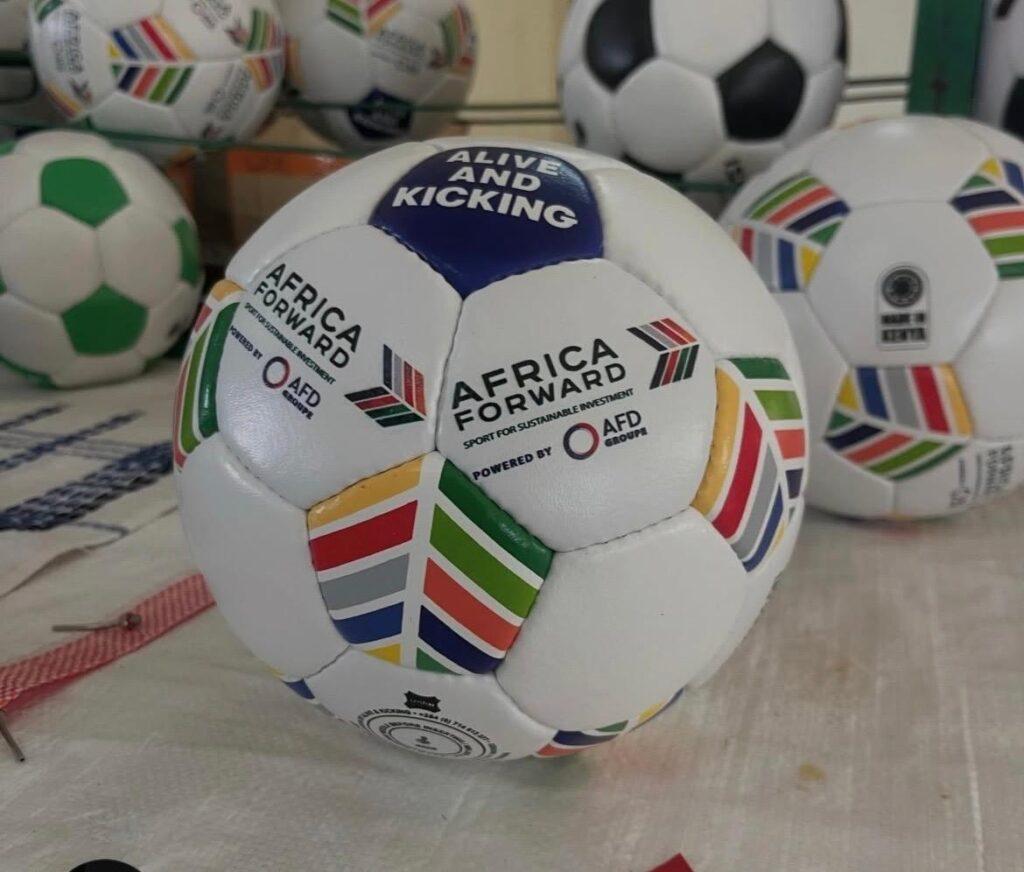
There is something quietly profound about a football. It needs no language. It crosses borders, breaks silences, and brings strangers into the same circle within seconds. At Alive and Kicking, we have always believed this. But this May, that belief was not just reaffirmed — it was witnessed by some of the most powerful leaders on the continent, and celebrated on one of Africa’s biggest stages. Built to Make a Difference In the second week of May, Alive and Kicking had the honour of partnering with the Agence Française de Développement (AFD) — the French Development Agency — at the African Forward Summit. Together, we created a collection of custom-made, hand-stitched leather balls specially designed to embody the spirit of the summit: Africa’s potential, youth empowerment, and sport as a driver of sustainable development. Every ball we make is an act of purpose. Stitched by skilled artisans in Kenya, each one creates dignified employment in communities that need it — that is what we Make. It was only natural that the balls we brought to this summit told the same story: that impact begins with people, with their hands, and with the belief that work itself is a form of dignity. The collaboration with AFD was more than a branding exercise. It was a meeting of two organisations that share a common conviction — that investment in people and grassroots tools like sport can ripple outward in ways no infrastructure project alone can achieve. Three Presidents and a Circle of Children But perhaps what will stay with us longest from the summit was a simple, human moment. Presidents Macron, Ruto, and Faye — leaders of France, Kenya, and Senegal — stepped off the formal stage and onto the pitch to kick a ball with a group of young children. No speeches. No podiums. Just three heads of state, a circle of kids, and one of our hand-stitched balls passing between them. “You matter, your future matters, and the tools of your world — your games, your joy, your streets — are worth the attention of the most powerful people in the room.” For those children, it was more than a photo opportunity. It was proof that the right to Play — to have access to sport, to be seen on a pitch, to have a ball at your feet — is not a luxury. It is a right worth championing at the highest level. That is what sport does. That is what a ball can do. Sport as a Tool for Development When institutions like AFD choose to partner with purpose-driven social enterprises like ours, they make a powerful declaration: that sustainable development does not only flow from boardrooms and policy papers — it also rises from the ground up, from communities, from children who learn resilience, teamwork, and belonging on a dusty pitch. We are deeply grateful to AFD for making space for Alive and Kicking at this table. We are proud that our balls were part of this moment. And we are more committed than ever to the work ahead.

When a Ball Becomes a Bridge Read More »

Unlocking Minds: Mental Health Education in Action

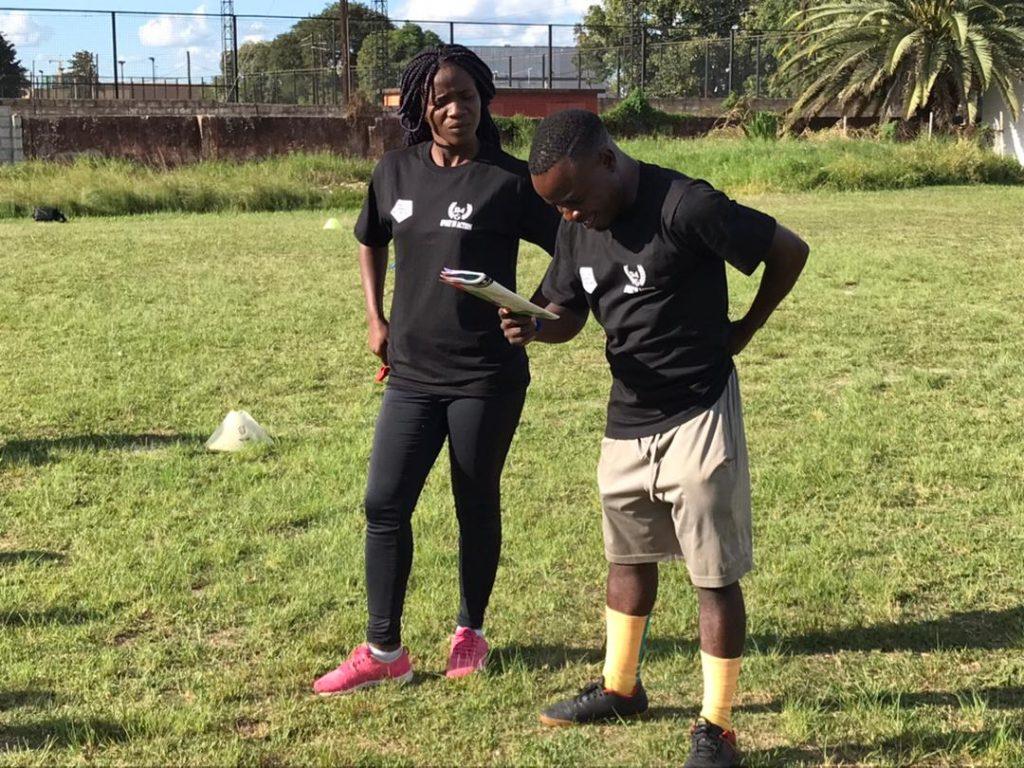
Sport In Action, in partnership with Alive and Kicking, has been implementing Mental Health Education since 2021, initially in Lusaka and Kabwe. Now, expanding its impact to Livingstone, the project has equipped community coaches with essential knowledge and tools. This blog showcases the transformative journey, emphasizing key achievements and the ripple effect on communities. In Livingstone, 30 community football coaches underwent a comprehensive four-day Mental Health Education Training. The inclusion of a Psychiatrist from Livingstone Central Hospital emphasized the importance of professional support and debunked myths surrounding mental health such as someone who has mental health problems maybe impacted by witchcraft.  Through the training we have been able to change perceptions and empower coaches to integrate mental health education into their existing programs. Key Achievements in Livingstone: Perception Shift: Participants discarded the misconception that mental health is only linked to severe cases, understanding that everyone has mental health. Comprehensive Understanding: Coaches identified various facets of poor mental health, from eating disorders to drug abuse. Real-life Testimonials: Personal stories, like the grandson of one of the coaches had been struggling from with their mental health due to the pressure he was facing as a professional athlete, highlighting that everyone and anyone can suffer from mental health challenges. Community Linkages: The presence of the Psychiatrist Officer created vital links, promoting community collaboration. Snapshot of Coach Survey results in Livingstone: Knowledge Increase: Participants’ understanding that “Everybody has mental health” rose from 53% to 100%. Improved Attitudes: Positive attitudes towards individuals with poor mental health increased from 73% to 97%. Seeking Support: Those willing to support someone with poor mental health rose from 60% to 97%. The coaches now return to their communities to deliver the programme on a weekly basis, with ongoing follow up support from Alive and Kicking and Sport in Action. As a result the programme becomes embedded into regular sessions and mental health conversations are common place. We look forward to sharing what impact the programme has on young people throughout the Livingstone area over the coming months. In conclusion The Mental Health Education Project is not just about training coaches; it’s a catalyst for change in communities. By tackling stigma, promoting awareness, and providing support, the project is making a significant impact on the mental well-being of players and community members. It’s not just a project; it’s a movement unlocking minds and fostering a positive change in perceptions surrounding mental health.

Unlocking Minds: Mental Health Education in Action Read More »