Zambia

Meet AK UK’s new Head of Growth!

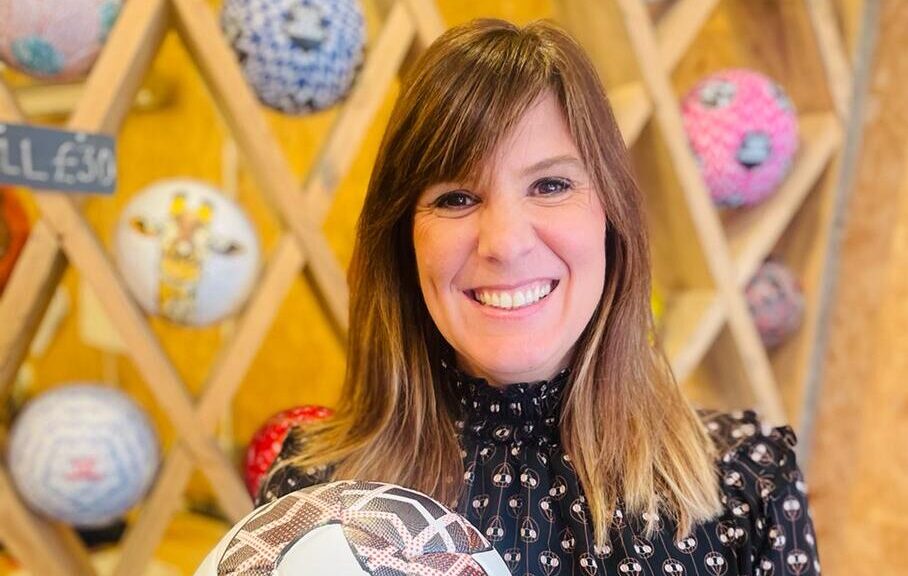
We know that ‘personal impact’ can be problematic: individuals should rarely be held responsible for social harm or good. However, it is also important not to be disempowered. We can all choose, to some degree, to make a change and an impact. With that in mind, we are delighted to welcome to Alive and Kicking our new Head of Growth, Catherine Orset. Catherine has chosen to turn her decades of experience in the corporate sporting goods world to join us in our mission of using football as a force for good: here she tells us about her journey to this point, and what goes into making such a decision. At the age of 27 I moved to the UK with very little English knowledge (my old university teacher will be happy to verify that!). I was willing to put myself in an uncomfortable situation in order to grow, and I think I learned that through sports. Over a decade of my teenage and young adult years I lived my entire life through sports: I trained and competed at the highest national level in discus. These years taught me to face challenges and make brave decisions for the rest of my life. So after 3 months in the UK of struggling to communicate with anyone, I finally managed to get my dream job at NikeTown London – I was greeting people with the clearest “good morning!” and “goodbye” you could hear on Oxford Street. I quickly learned from my amazing colleagues there and progressed through Running department then Customer Service. 2 years on, I had the opportunity to work on a specific project, traveling the country for Nike. I could not believe it! When I was at NikeTown in one of our morning huddles, one of my colleagues was giving a presentation to the team. I remember watching her, thinking “the day that I become that girl I can leave this country and die happy”. Two years after that, it happened… I was living that moment. After that I think I was fearless, and I never let myself get too comfortable. I then worked for Nike Accessories UK Licensee and oversaw the South England area for 4 years, another wonderful experience that taught me a lot about myself and helped me to gain confidence. Eventually I moved to Under Armour as a key account manager for almost 5 amazing years. I still look back on that young girl coming to London, crying every day because nobody could understand her, and I am so proud of her. I learned a lot during my time there, not only about work but from a personal point of view too. I am grateful for my years spent in such big corporates and will never forget certain privileged moments we had as employees. But I am proudest of my most recent move: leaving the corporate world to work for a social enterprise. After the COVID-19 pandemic, my priorities changed. While it was important for me to still work in sports, I needed to bring more purpose into my professional life. I needed to work more directly with people again, and know I was making an impact. Maybe it was a little mid-life crisis as well! I have been involved with Alive and Kicking since 2019, when I went to a breakfast organised by Africa Sports Unified and began volunteering with the charity, so I am really excited to join the company as the new Head of Growth now. Giving communities all over the world access to sport and health education, creating ethical jobs, while doing what I love and am good at… every day I wake up excited. I am looking forward to the next decade of my life – we’re going to have fun!

Meet AK UK’s new Head of Growth! Read More »
Is it possible to gift ethically in the festive season?

‘Personal impact’ can be a problematic concept when it comes to consumption and marketing, for many reasons. Still, during the festive season more companies than at any other time of year come together, and concentrate their most emotionally loaded advertising efforts on individual consumers: you. Many of us already feel the pressure to come up with unique gift ideas year after year, let alone to do so ethically. Add in the expertly-crafted marketing drives and social pressure surrounding the festive season, and this time of year can become harrowing. This is exactly why it’s the perfect time to take a minute, slow down, and think about what’s really important: about why we give gifts, and if we do choose to give them how we can maximise their wider positive impact. The first rule of being a mindful gift-giver is to try and ‘gift slowly’. What this means is really down to what is most important and what is sustainable for you. With our often hectic lives and an entire industry focused entirely on persuading us all to spend our money on this or that object right now, we can often forget that the idea behind gifting is mutual celebration. Think of gifting as a long-term process rather than a frantic, once-a-year checkbox. Keep a box with a list of gift ideas in it, and gifts you might come across as you go about your life the whole year round. The most classic and familiar form of ‘slow gifting’ is probably “gifting experiences” (from a homemade picnic to an all-expenses holiday away) or otherwise intangible gifts like the animal sponsorships offered by everyone from local cat rescues to the World Wildlife Fund, none of which generate waste the way the short-term gifting industry pushes us to. Meaningful time spent together is arguably one of the most valuable gifts of all in a world where we are all constantly looking for ways to save time and maximise efficiency. And, of course, you can gift ethical products, ideally bought at a pace you can afford and consider properly throughout the year rather than in one mad rush. Often, slow gifting means aiming to give one really carefully chosen and invested-in gift rather than an assortment of throwaway tokens; but if you are someone who delights in compiling the perfect gift basket then collecting and curating ideas or products slowly can still elevate your gift-giving to a new level. ‘Ethical’ products might be secondhand, or from small local businesses, or of course made in fair working conditions for an ethical wage with 100% of profit going into charity initiatives around the world! You can extend your new mindful gifting mentality to wrapping too. Think about reusing paper (or going old-school with newspaper) or sourcing recycled or otherwise more environmentally friendly paper ahead of time. You can buy or even, if you’re really organised with your time, make ‘seeded wrapping paper’, which the lucky recipient can bury in a pot or in their garden and grow. Scarves and drawstring fabric bags can double as a gift in their own right. We can’t not shout-out our leather ball’s packaging here, with our Alive and Kicking balls being sold in carrier bags upcycled from the woven sacking material our balls are shipped in: if you’re lucky, you’ll get one with a still-legible shipping stamp across it. There are a lot of much larger decisions we all need to grapple with when it comes to minimising the negative impact of our choices and especially our consumption; but sometimes, it’s nice to think about giving somebody the perfect present. Small, mindful choices made at any or every level can accumulate into big change over time, so keep making changes to maximise your positive impact in ways that are sustainable for you. Part of this involves remembering to find the joy in these choices, so that continuously making them does not become a chore.

Is it possible to gift ethically in the festive season? Read More »

‘MAKE, PLAY, LIVE’: Women + Alive and Kicking

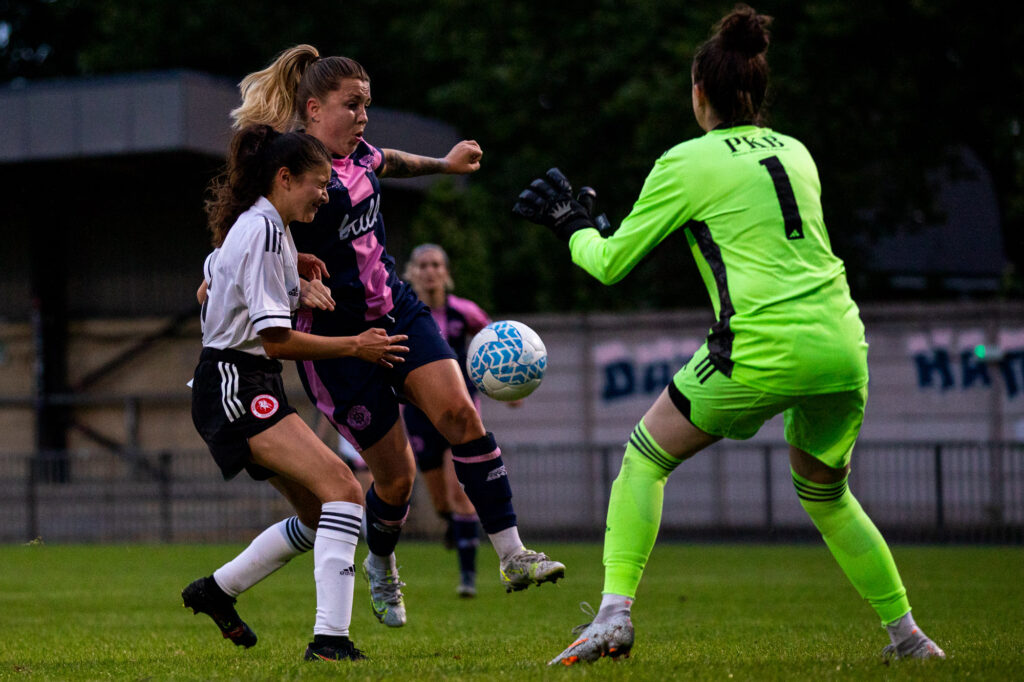
‘Women in football’ is a story full of highs and lows, since the early days of the sport and its many female celebrities (including publicly LGBTQ+ players like Lily Parr in the 1920s) before the sport was banned by the FA for decades and its slow but steady ascent once again in the years since its official return. Most recently there were of course the 2022 Euros, the final of which was watched by a record-breaking 17.4 million viewers on the BBC. Marking the first time the English team have won the Euros and their second major international trophy win ever – a feat those of us in our UK office are still cheering about – the success of the Lionesses has highlighted the importance of women to football, and football to women. There are whole books written about this wider history (our recommendation is A Woman’s Game, written by a football journalist and covering the past century) but today we’re spotlighting the women involved with Alive and Kicking. On the ‘MAKE’ side of our three-pronged impact strategy, we’re proud to say a large number of our employees are women: women are classed as a ‘vulnerable job group’ in both Kenya and Zambia, where our balls are manufactured, and as with most of our employees many have not had formal and safe, ethically paid employment before. We’re particularly proud of the fact that our manufacturing centres in both these countries are female-led. They’ve each transformed their teams in different ways: as you may remember, we’ve talked before with Jane, our Director in Zambia, who has worked so successfully with people living with disabilities that this year she was approached by the Zambian government to help them engage with this community and improve working conditions for them throughout the country. Many of our wider impact programmes have empowered women all over the world in various ways too. Our various sports and health education programmes deliver vital information to the women who participate in them, but they also empower those who take part as our collaborators in delivering them: this is the ‘LIVE’ in our impact strategy seen at its best. We’ve previously talked about how Irene, one of the coaches in our Mental Health Education Programme in Kenya, chose to pursue further mental health training after the programme concluded; and the data from the participants in this programme who received the mental health training from people like Irene were overwhelmingly positive. Finally this brings us to the ‘PLAY’. Most obvious is our ball libraries, which are targeted at young people who have limited access to sports equipment. One of our borrowers, Sarah*, has been in the care system for as long as she can remember, and has always enjoyed watching football on TV but not had much opportunity to play herself and on her own terms. She started using one of our ball libraries in Newcastle when she was 14. “I thought it was strange that they would trust me with the ball but I liked the feeling of having to take care of it – it was nice to be trusted by the staff in the library too.” – Sarah, one of our ball library users Sarah began to borrow a ball several times a week, and then to play with existing friends and make new ones. Six months on from borrowing her first ball, she’s gained the confidence to join a local football team (though she still plays more informally with her friends using balls from our library!) and both she and her carer feel the opportunity has had immense positive ripple effects on her self-confidence. While we limit our data collection in these libraries to foster an atmosphere of trust rather than surveillance (Sarah is a specific, consensual case study) our library hosts have observed that there is a roughly even gender split between boys and girls borrowing footballs. This indicates that given the chance, girls want to participate in sports just as much as the more stereotypical ‘boys kicking a ball around’, and we know that they have just as much to gain in terms of the physical and mental health benefits of the physical activity as well as the team and relationship-building elements of the game. As always, we maximise our impact when we join forces with other organisations (especially locally trusted and grassroots groups). Have a look at some of our recent partners below to see who’s closest to your heart … View this post on Instagram A post shared by Romance FC (@romance.fc) View this post on Instagram A post shared by This Fan Girl (@thisfangirl_) View this post on Instagram A post shared by SHE KICKS women’s football mag (@shekicksmag) *name changed for safeguarding reasons

‘MAKE, PLAY, LIVE’: Women + Alive and Kicking Read More »

Our sustainability: spotlight on ball repair in Zambia

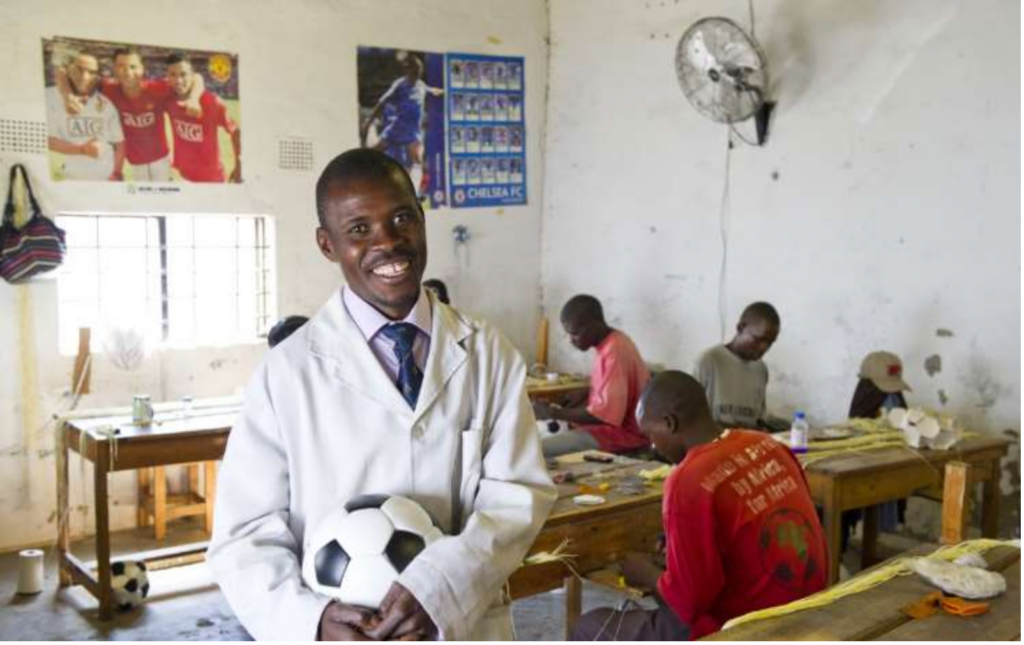
We pride ourselves on making a genuinely impactful (and of course beautiful, durable) product. That’s what our slogan, “Make, Play, Live”, means. Our entire business from production to profit is geared around helping as many people as possible, and we think we’ve done a pretty good job so far! Alive and Kicking has created over 1000 fairly paid, ethical conditions jobs for our employees, donated 170,000 footballs to communities around the world, and much more, but we can always strive to do better. Today, we’re going to talk a little bit about something you may not know much about: our environmental sustainability. Our entire impact framework is built with the UN’s Sustainable Development Goals in mind. This helps us to clearly align ourselves with the global strategies deemed most efficient and necessary, as well as ensuring our progress is transparent and easy to work alongside (since we love to collaborate with other organisations to maximise our impact). But what it also makes clear is that social and environmental sustainability go hand-in-hand. Although our first priority has always been social impact, you can already see how the two relate in the production of our footballs. Very nearly all of our materials are sourced locally to where they are made, with only our ball bladders imported from another country. Our leather is offcuts sourced from local tanneries, meaning it is high-quality while remaining relatively cheap, so that as much money as possible can be funnelled to where it can really make a difference. Conveniently, these factors also mitigate the majority of the carbon emitted by producing a regular, mainstream football! While there is an ongoing debate over the ethics and sustainability of leather when weighing up animal rights, vegan (generally plastic) alternatives, gases produced by cows and so forth, our leather is offcuts and therefore at least no extra issues are generated. On top of this, the usual carbon footprint of transporting materials from all over the world, or even shipping the ball from country to country for different stages of the making process (watch our balls being made here for some idea of just how many steps this can take) is almost completely mitigated. In other words, our efforts to maximise our social impact through the money and employment opportunities we put into the local economy also mean that we are making a more environmentally friendly ball. As our collaborator Jean-Baptiste, CEO and founder of Vista, put it – have a look at our recent chat with him here for some more information on the carbon footprint of the average football – nobody really thinks about where a football comes from. Nobody thinks about where they go either; and yet 20 million footballs go to landfill every year in Africa alone. There are budding initiatives around recycling balls and indeed just about every other football accessory from boots to pitches. However, for now we still have few options with regards to what to do with our footballs at the end of their lives. With Alive and Kicking balls, of course, this is less problematic than dealing with your average synthetic ball: ours is biodegradable. On top of this, it lasts several times longer than a mainstream football due to the quality of hand-stitching and materials used, so the frequency of waste is reduced at the source. But we shouldn’t be satisfied yet, and of the famous “Rs” of sustainability (there’s anywhere from 3 to 14, depending who you ask) there’s one we’ve been making big progress on, and that’s “repair”. This brings us to our team in Zambia – headed by Jane Thiong’o – and something they’ve been doing for a long time. Anyone local to our Zambian centre can bring in any football for a repair if it gets a puncture or a seam comes undone, and our skilled hand-stitchers will sort it out. This is, of course, excellent for our environmental sustainability, feeding into what we hope will be an increasingly circular economy within our company. It extends the life of the ball and reduces the number of balls going to landfill. In some cases this even includes brand new balls, which are sometimes delivered to local retailers from overseas already damaged; working towards greater sustainability together is far more important than ‘competition’! However, perhaps surprisingly, offering ball repair also helps us to maximise our social impact. By diversifying our services – while sticking to what we’re good at – as well as welcoming balls from any manufacturer, we expand our customer base and our profit, 100% of which as always goes into helping communities around the world. Secondly, the smaller, easier task of repairing a ball, as opposed to hand-stitching one from scratch, is ideal for employees who may need to reduce their workload for reasons including completing or pursuing further education, and family care responsibilities. This helps us to uphold our commitment to providing steady, fairly paid work for those who join our team even as their circumstances may change. Once again, without even trying we can see how social and environmental sustainability feed into one another. Any progress towards ‘sustainability’ must be made without sacrificing the quality and durability of our products, or the social impact of our manufacturing centres and wider charity initiatives. This is an ongoing process. We’ve already started doing our best to ship orders from our production centres to points of distribution in bulk and by sea, and of course our ball has an unusually small carbon footprint already. We’re also thinking about using more recycled packaging and perhaps some day – as sustainable material engineering improves all the time – for the balls themselves. Having seen the success of the ball repair programme in Zambia, we’re now thinking of how we might be able to roll out something similar in other countries where our customers – but  unfortunately not our trained stitchers – are based. Let us know if you have any interest in helping, suggestions, or think that there’s

Our sustainability: spotlight on ball repair in Zambia Read More »

Alive and Kicking x UNHCR #dreamball

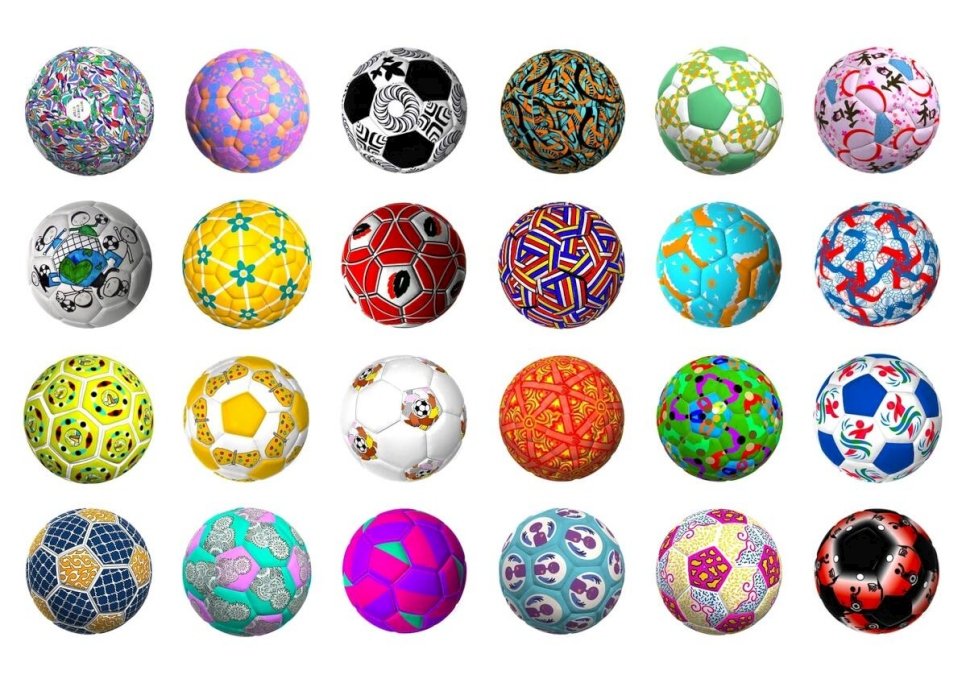
Alive and Kicking and UNHCR, the UN Refugee Agency, have come together to celebrate the power of sport to bring people together. As part of UNHCR’s annual Youth with Refugees Art Contest, artists from across the world have been designing beautiful footballs with a winning five set to go into production at Alive and Kicking’s Kenyan centre. Those five footballs are available for pre order online with proceeds going toward sport programmes for refugees.  Over 1,600 young artists from 100 countries submitted artwork and football designs related to the “Together through Sport” theme. A third of participants were themselves refugees, asylum-seekers or internally displaced people. The full list of winners can be found here. “For young people uprooted by war, sport is a great way to feel included and protected,” said Pauline Eluère, who leads youth engagement initiatives at UNHCR. “Through the art contest, we wanted to give young artists a chance to use their talents to demonstrate the transformative power of sport and mobilize support for sport programmes for displaced communities.” “Alive and Kicking are delighted to be partnering with UNHCR on their Youth with Refugees Art Contest,” said Ben Sadler, CEO of Alive and Kicking. “Not only will it showcase the fantastic art and design skills of young refugees and supporters across the globe, it will also support ethical employment at Alive and Kicking’s centres while giving thousands of young people access to sport.”  The five winners are Nadira, a 16-year-old Afghan refugee in India; James, a 10-year-old Irish football fan; Hala, a 12-year-old Palestine refugee in Saudi Arabia; Gerald, a 23-year-old refugee footballer from Cameroon living in Italy and advising the Special Olympics, and Skarly, a 12-year old Venezuelan living in a temporary shelter in Brazil. “I was born a differently abled person,” said Nadira. “The sport world makes us, especially refugees and people who are called disabled but not differently abled, endeavour for the best. I wanted to show how sport can transform people’s lives along with bringing hope and joy to everyone, everywhere” A jury of athletes, sport journalists and artists helped select the winning submissions.  Alphonso Davies, the Canadian football phenomenon who is also a former refugee and UNHCR Goodwill Ambassador, said: “The designs were very powerful. It’s amazing to see the vision of these kids and how they perceive a united society.”  The 2021 Youth with Refugees Art contest underscored two issues that are important to UNHCR’s mission: the necessity of young people’s involvement in advocating for those forced to flee and the significance of sport in supporting the physical and mental health of refugees worldwide.  The winning balls are available for sale on Alive and Kicking’s website. The football designs and other winning illustrations have been put on display in a 3D digital exhibition.  

Alive and Kicking x UNHCR #dreamball Read More »