
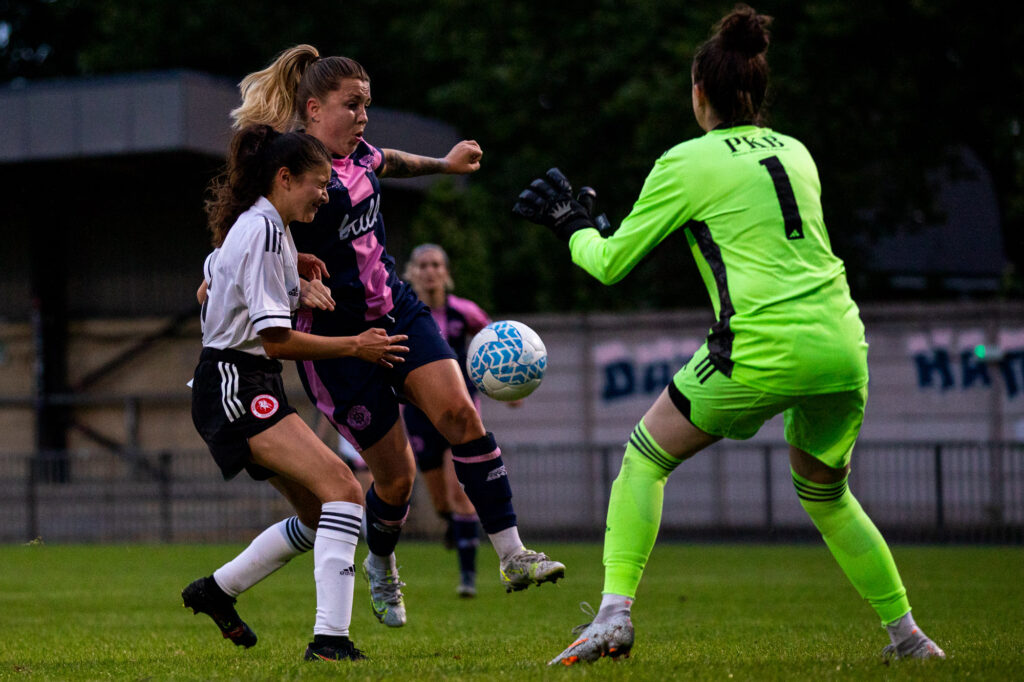
‘Women in football’ is a story full of highs and lows, since the early days of the sport and its many female celebrities (including publicly LGBTQ+ players like Lily Parr in the 1920s) before the sport was banned by the FA for decades and its slow but steady ascent once again in the years since its official return. Most recently there were of course the 2022 Euros, the final of which was watched by a record-breaking 17.4 million viewers on the BBC. Marking the first time the English team have won the Euros and their second major international trophy win ever – a feat those of us in our UK office are still cheering about – the success of the Lionesses has highlighted the importance of women to football, and football to women.
There are whole books written about this wider history (our recommendation is A Woman’s Game, written by a football journalist and covering the past century) but today we’re spotlighting the women involved with Alive and Kicking. On the ‘MAKE’ side of our three-pronged impact strategy, we’re proud to say a large number of our employees are women: women are classed as a ‘vulnerable job group’ in both Kenya and Zambia, where our balls are manufactured, and as with most of our employees many have not had formal and safe, ethically paid employment before. We’re particularly proud of the fact that our manufacturing centres in both these countries are female-led. They’ve each transformed their teams in different ways: as you may remember, we’ve talked before with Jane, our Director in Zambia, who has worked so successfully with people living with disabilities that this year she was approached by the Zambian government to help them engage with this community and improve working conditions for them throughout the country.
Many of our wider impact programmes have empowered women all over the world in various ways too. Our various sports and health education programmes deliver vital information to the women who participate in them, but they also empower those who take part as our collaborators in delivering them: this is the ‘LIVE’ in our impact strategy seen at its best. We’ve previously talked about how Irene, one of the coaches in our Mental Health Education Programme in Kenya, chose to pursue further mental health training after the programme concluded; and the data from the participants in this programme who received the mental health training from people like Irene were overwhelmingly positive.
Finally this brings us to the ‘PLAY’. Most obvious is our ball libraries, which are targeted at young people who have limited access to sports equipment. One of our borrowers, Sarah*, has been in the care system for as long as she can remember, and has always enjoyed watching football on TV but not had much opportunity to play herself and on her own terms. She started using one of our ball libraries in Newcastle when she was 14.
“I thought it was strange that they would trust me with the ball but I liked the feeling of having to take care of it – it was nice to be trusted by the staff in the library too.” – Sarah, one of our ball library users
Sarah began to borrow a ball several times a week, and then to play with existing friends and make new ones. Six months on from borrowing her first ball, she’s gained the confidence to join a local football team (though she still plays more informally with her friends using balls from our library!) and both she and her carer feel the opportunity has had immense positive ripple effects on her self-confidence.
While we limit our data collection in these libraries to foster an atmosphere of trust rather than surveillance (Sarah is a specific, consensual case study) our library hosts have observed that there is a roughly even gender split between boys and girls borrowing footballs. This indicates that given the chance, girls want to participate in sports just as much as the more stereotypical ‘boys kicking a ball around’, and we know that they have just as much to gain in terms of the physical and mental health benefits of the physical activity as well as the team and relationship-building elements of the game.
As always, we maximise our impact when we join forces with other organisations (especially locally trusted and grassroots groups). Have a look at some of our recent partners below to see who’s closest to your heart …
View this post on Instagram
View this post on Instagram
View this post on Instagram
*name changed for safeguarding reasons