Alive and Kicking x UNHCR impact report: sustainable impact and the refugee crisis
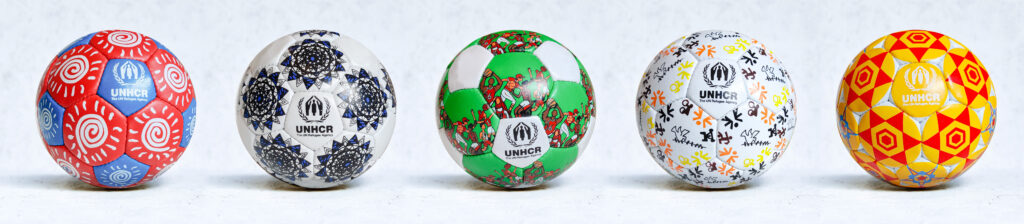
Last year we partnered with the UNHCR to bring 5 young people’s football designs to life. The profit made from selling the resulting, limited-edition balls went into supporting refugees around the world, both through the UNHCR and through our own contacts in Kenya, where we will be able to give 8,550 young refugees access to 49,590 hours of play.
In a month that has seen more eyes turn to the work being done (by the UNHCR and many others) with Ukrainian refugees, we hope that the data coming in from this collaboration can help us consider how, in a sadly ongoing and global crisis, we can all contribute to positive change in the long run. This month we’re thinking about sustainable impact, individual creativity, and solidarity from local communities extending through to the whole world; and how ‘making an impact’ can mean different things to different people.
For Hala, Nadira, Skarly, James, and Gerald, it meant drawing their dream ball. For our team in Kenya – where this partnership helped support 54 full time jobs and, in turn more than 300 individual dependents – it means completing their education, gaining the skills and experience they need with Alive and Kicking to get to where they want to be while building a better life for their families, all of which ripples out into positive social and economic change.
For Alive and Kicking and its supporters (that’s you!) it includes backing these employees, who come from vulnerable job groups in the areas we work including adults with disabilities, or with no formal work experience or formal schooling, as well as contributing to their local economy to drive long-term positive change for similarly vulnerable groups in the area. By working with other charitable organisations – from grassroots campaigns in sub-Saharan Africa to global organisations like the UNHCR – we are all able to combine and multiply our impact. That’s why collaborations like this matter.


Looking again at the way people have mobilised around Ukraine’s refugees shows us how collaboration can happen organically on a huge scale: we’ve seen groups and individuals from countries around the region come to help however they are able, with people housing strangers in their own homes, helping with translations and paperwork, even setting up emergency vet stations and pet-food supply stations for those fleeing with their animals. Worldwide, people from Africa and its diaspora have come together to support the large number of African students studying at Ukrainian universities in coming home safely. Protesters have gathered everywhere from Russia to London to the US to express solidarity with those affected. Ukrainians and their neighbours have come together in cities all over the world to make traditional crafts and food for fundraisers.
All these examples show the importance of providing concrete aid but also of celebrating humanity (our pets and families, our identities, our cultures) in times of crisis. In the spirit of bell hooks’ “love ethic”, we can see that creativity, generosity, and community especially in the face of hardship are vital to sustainable and regenerative social change. With 4 of the 5 winners of the ‘#dreamball’ competition being refugees themselves, we’re grateful to have had such an opportunity not only to contribute to the struggle against the refugee crisis and to continue supporting our own employees, but also to have been able to showcase the hope and joy of these young people against huge odds.
In a flourish perfect for sending off this month and to see all these ideas of creativity, joy, collaboration, and more come together with football, watch how the Japan branch of the UNHCR celebrated Nadira’s ball.