Pride in football
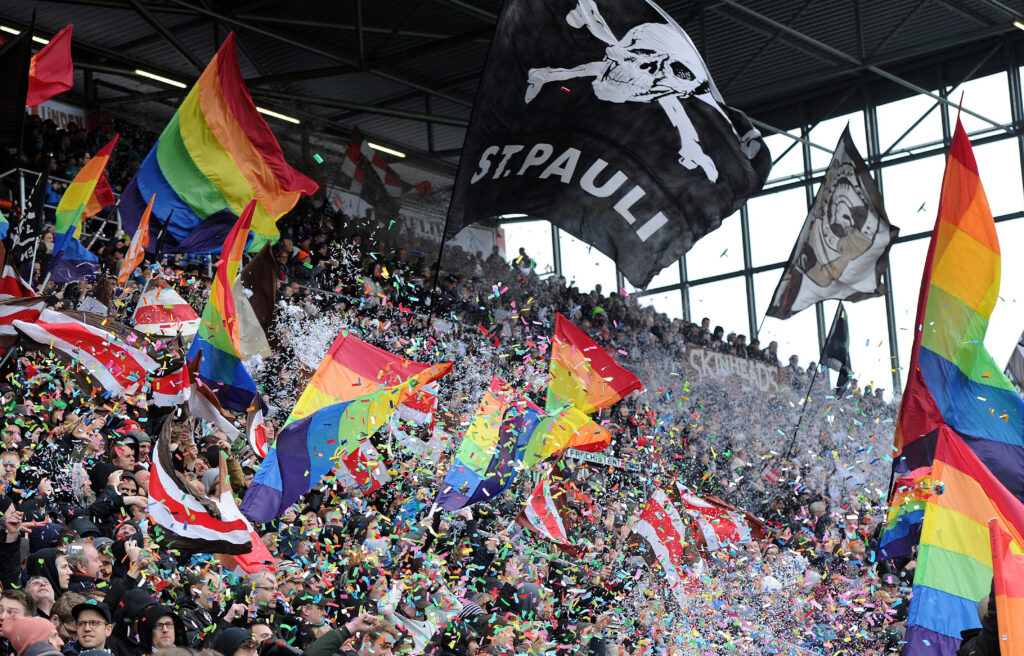
Header image: St Pauli tifo LGBT support (2016) Witters/Tim Groothius. June 2022 marks the 52nd LGBTQ+ Pride month since the ‘holiday’ – initially a celebration and demonstration of proud queer identity that grew out from American marches commemorating the 1969 protests at Stonewall – was adopted worldwide. We’ve talked about LGBTQ+ history in football before (and can now add the cheering editor’s note that in the mere 5 months since that article was written new history has been made, with the second active professional footballer ever in the UK to publicly come out). However, this month, we’re thinking more generally about that concept, “pride”. Most obvious in the context of football is pride in your team. What started as a very simple celebration of community identity – with people generally supporting whatever team they happened to live closest to – has developed into a sophisticated system of costume (scarves, colours, face paint), chants, slang, even literature (with fanzines and their online versions becoming ever more refined and widely read). The symbolism involved can be internationally and instantly recognisable, or subtle enough to be noticed only by those ‘in the know’. Fans are in control of what they are proud of and how they show it, and show it they do: they gather in groups to publicly protest official choices as happened after the renaming of “Hull City AFC”, or individuals may take existing symbols of team pride and make them entirely their own. The latter was very popularly done by drag queen Bimini, who assembled an outfit to watch their home team, Norwich FC, for a ‘hometown pride’ runway. Of course, it cannot be ignored that like pride itself, there is a negative side to fan culture. Racist and homophobic language, for instance, have historically been loud and widely accepted within the football community. The “hooligan calling cards” of the 70s are an aestheticised window onto the sometimes-lethal lengths to which fans (“fanatics”) would take their team pride. Both these things may well stem partly from football’s specificity as a platform for both national pride and (particularly male) competition, “war without weapons”. However, this is also why it is so important that the game’s potential for identity and community building, as well as emotional release for groups often given little other public outlet, are respected and used for more positive means where possible. Nevertheless, football has a unique ability to provide community and comfort to people – pride in identity and community, the right to be part of a group, to feel good about themselves and have fun – which should not be overshadowed. This includes LGBTQ+ people, with hundreds of queer- and trans-inclusive teams all over the world, but is an idea that can and has expanded to include just about anyone. Women’s football, after being marginalised and actively forbidden for most of the 20th century, has become one of the most progressive and inclusive professional sports in the world (particularly for LGBTQ+ people, in fact). There are grassroots teams specifically for refugees, for newcomers to a given area, for people with disabilities, for older players, and more. Even where groups are not yet included in the mainstream, they can use the worldwide “language” of leagues, team colours, crests, and the game itself to celebrate their identities under their own terms, as demonstrated by CONIFA (the Confederation of Independent Football Associations; “nations, de-facto nations, regions, minority peoples and sports isolated territories” not included in FIFA). Both pride and football have at times been used maliciously, for negative impact. Neither is innocent and neither should be engaged with uncritically, but they can both be powerful tools for togetherness, communication, and joy. We at Alive and Kicking hope that our own work, working with communities around the world, can stand alongside the many people and initiatives briefly mentioned in this article as an exemplar for how we can be proud of and within football. We can both play and celebrate the game and promote inclusive, multifaceted, intersectional pride (and, of course, Pride) not only for ourselves or our teams, but the whole sport and its ever-brighter future. Images sourced with the help of the Design Museum, currently showing ‘Football: Designing The Beautiful Game’ until 29th August, where visitors can see both the Hillsborough Memorial Banner and the Corbin Shaw banner pictured above.