Joel Phillimore

‘MAKE, PLAY, LIVE’: Women + Alive and Kicking

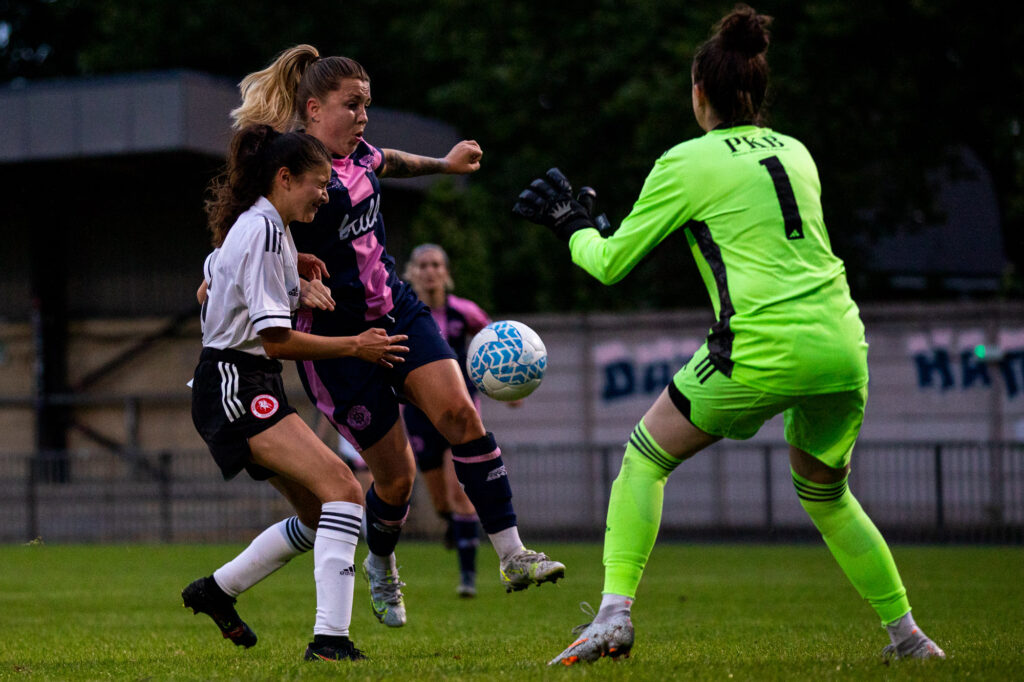
‘Women in football’ is a story full of highs and lows, since the early days of the sport and its many female celebrities (including publicly LGBTQ+ players like Lily Parr in the 1920s) before the sport was banned by the FA for decades and its slow but steady ascent once again in the years since its official return. Most recently there were of course the 2022 Euros, the final of which was watched by a record-breaking 17.4 million viewers on the BBC. Marking the first time the English team have won the Euros and their second major international trophy win ever – a feat those of us in our UK office are still cheering about – the success of the Lionesses has highlighted the importance of women to football, and football to women. There are whole books written about this wider history (our recommendation is A Woman’s Game, written by a football journalist and covering the past century) but today we’re spotlighting the women involved with Alive and Kicking. On the ‘MAKE’ side of our three-pronged impact strategy, we’re proud to say a large number of our employees are women: women are classed as a ‘vulnerable job group’ in both Kenya and Zambia, where our balls are manufactured, and as with most of our employees many have not had formal and safe, ethically paid employment before. We’re particularly proud of the fact that our manufacturing centres in both these countries are female-led. They’ve each transformed their teams in different ways: as you may remember, we’ve talked before with Jane, our Director in Zambia, who has worked so successfully with people living with disabilities that this year she was approached by the Zambian government to help them engage with this community and improve working conditions for them throughout the country. Many of our wider impact programmes have empowered women all over the world in various ways too. Our various sports and health education programmes deliver vital information to the women who participate in them, but they also empower those who take part as our collaborators in delivering them: this is the ‘LIVE’ in our impact strategy seen at its best. We’ve previously talked about how Irene, one of the coaches in our Mental Health Education Programme in Kenya, chose to pursue further mental health training after the programme concluded; and the data from the participants in this programme who received the mental health training from people like Irene were overwhelmingly positive. Finally this brings us to the ‘PLAY’. Most obvious is our ball libraries, which are targeted at young people who have limited access to sports equipment. One of our borrowers, Sarah*, has been in the care system for as long as she can remember, and has always enjoyed watching football on TV but not had much opportunity to play herself and on her own terms. She started using one of our ball libraries in Newcastle when she was 14. “I thought it was strange that they would trust me with the ball but I liked the feeling of having to take care of it – it was nice to be trusted by the staff in the library too.” – Sarah, one of our ball library users Sarah began to borrow a ball several times a week, and then to play with existing friends and make new ones. Six months on from borrowing her first ball, she’s gained the confidence to join a local football team (though she still plays more informally with her friends using balls from our library!) and both she and her carer feel the opportunity has had immense positive ripple effects on her self-confidence. While we limit our data collection in these libraries to foster an atmosphere of trust rather than surveillance (Sarah is a specific, consensual case study) our library hosts have observed that there is a roughly even gender split between boys and girls borrowing footballs. This indicates that given the chance, girls want to participate in sports just as much as the more stereotypical ‘boys kicking a ball around’, and we know that they have just as much to gain in terms of the physical and mental health benefits of the physical activity as well as the team and relationship-building elements of the game. As always, we maximise our impact when we join forces with other organisations (especially locally trusted and grassroots groups). Have a look at some of our recent partners below to see who’s closest to your heart … View this post on Instagram A post shared by Romance FC (@romance.fc) View this post on Instagram A post shared by This Fan Girl (@thisfangirl_) View this post on Instagram A post shared by SHE KICKS women’s football mag (@shekicksmag) *name changed for safeguarding reasons

‘MAKE, PLAY, LIVE’: Women + Alive and Kicking Read More »
Our sustainability: spotlight on ball repair in Zambia

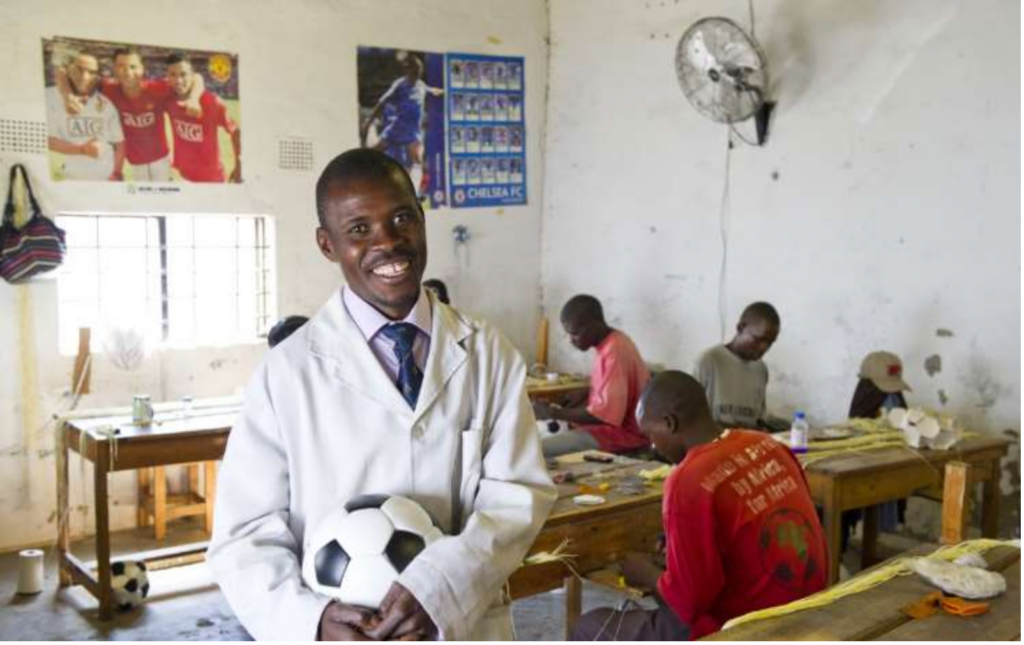
We pride ourselves on making a genuinely impactful (and of course beautiful, durable) product. That’s what our slogan, “Make, Play, Live”, means. Our entire business from production to profit is geared around helping as many people as possible, and we think we’ve done a pretty good job so far! Alive and Kicking has created over 1000 fairly paid, ethical conditions jobs for our employees, donated 170,000 footballs to communities around the world, and much more, but we can always strive to do better. Today, we’re going to talk a little bit about something you may not know much about: our environmental sustainability. Our entire impact framework is built with the UN’s Sustainable Development Goals in mind. This helps us to clearly align ourselves with the global strategies deemed most efficient and necessary, as well as ensuring our progress is transparent and easy to work alongside (since we love to collaborate with other organisations to maximise our impact). But what it also makes clear is that social and environmental sustainability go hand-in-hand. Although our first priority has always been social impact, you can already see how the two relate in the production of our footballs. Very nearly all of our materials are sourced locally to where they are made, with only our ball bladders imported from another country. Our leather is offcuts sourced from local tanneries, meaning it is high-quality while remaining relatively cheap, so that as much money as possible can be funnelled to where it can really make a difference. Conveniently, these factors also mitigate the majority of the carbon emitted by producing a regular, mainstream football! While there is an ongoing debate over the ethics and sustainability of leather when weighing up animal rights, vegan (generally plastic) alternatives, gases produced by cows and so forth, our leather is offcuts and therefore at least no extra issues are generated. On top of this, the usual carbon footprint of transporting materials from all over the world, or even shipping the ball from country to country for different stages of the making process (watch our balls being made here for some idea of just how many steps this can take) is almost completely mitigated. In other words, our efforts to maximise our social impact through the money and employment opportunities we put into the local economy also mean that we are making a more environmentally friendly ball. As our collaborator Jean-Baptiste, CEO and founder of Vista, put it – have a look at our recent chat with him here for some more information on the carbon footprint of the average football – nobody really thinks about where a football comes from. Nobody thinks about where they go either; and yet 20 million footballs go to landfill every year in Africa alone. There are budding initiatives around recycling balls and indeed just about every other football accessory from boots to pitches. However, for now we still have few options with regards to what to do with our footballs at the end of their lives. With Alive and Kicking balls, of course, this is less problematic than dealing with your average synthetic ball: ours is biodegradable. On top of this, it lasts several times longer than a mainstream football due to the quality of hand-stitching and materials used, so the frequency of waste is reduced at the source. But we shouldn’t be satisfied yet, and of the famous “Rs” of sustainability (there’s anywhere from 3 to 14, depending who you ask) there’s one we’ve been making big progress on, and that’s “repair”. This brings us to our team in Zambia – headed by Jane Thiong’o – and something they’ve been doing for a long time. Anyone local to our Zambian centre can bring in any football for a repair if it gets a puncture or a seam comes undone, and our skilled hand-stitchers will sort it out. This is, of course, excellent for our environmental sustainability, feeding into what we hope will be an increasingly circular economy within our company. It extends the life of the ball and reduces the number of balls going to landfill. In some cases this even includes brand new balls, which are sometimes delivered to local retailers from overseas already damaged; working towards greater sustainability together is far more important than ‘competition’! However, perhaps surprisingly, offering ball repair also helps us to maximise our social impact. By diversifying our services – while sticking to what we’re good at – as well as welcoming balls from any manufacturer, we expand our customer base and our profit, 100% of which as always goes into helping communities around the world. Secondly, the smaller, easier task of repairing a ball, as opposed to hand-stitching one from scratch, is ideal for employees who may need to reduce their workload for reasons including completing or pursuing further education, and family care responsibilities. This helps us to uphold our commitment to providing steady, fairly paid work for those who join our team even as their circumstances may change. Once again, without even trying we can see how social and environmental sustainability feed into one another. Any progress towards ‘sustainability’ must be made without sacrificing the quality and durability of our products, or the social impact of our manufacturing centres and wider charity initiatives. This is an ongoing process. We’ve already started doing our best to ship orders from our production centres to points of distribution in bulk and by sea, and of course our ball has an unusually small carbon footprint already. We’re also thinking about using more recycled packaging and perhaps some day – as sustainable material engineering improves all the time – for the balls themselves. Having seen the success of the ball repair programme in Zambia, we’re now thinking of how we might be able to roll out something similar in other countries where our customers – but  unfortunately not our trained stitchers – are based. Let us know if you have any interest in helping, suggestions, or think that there’s

Our sustainability: spotlight on ball repair in Zambia Read More »

Pride in football

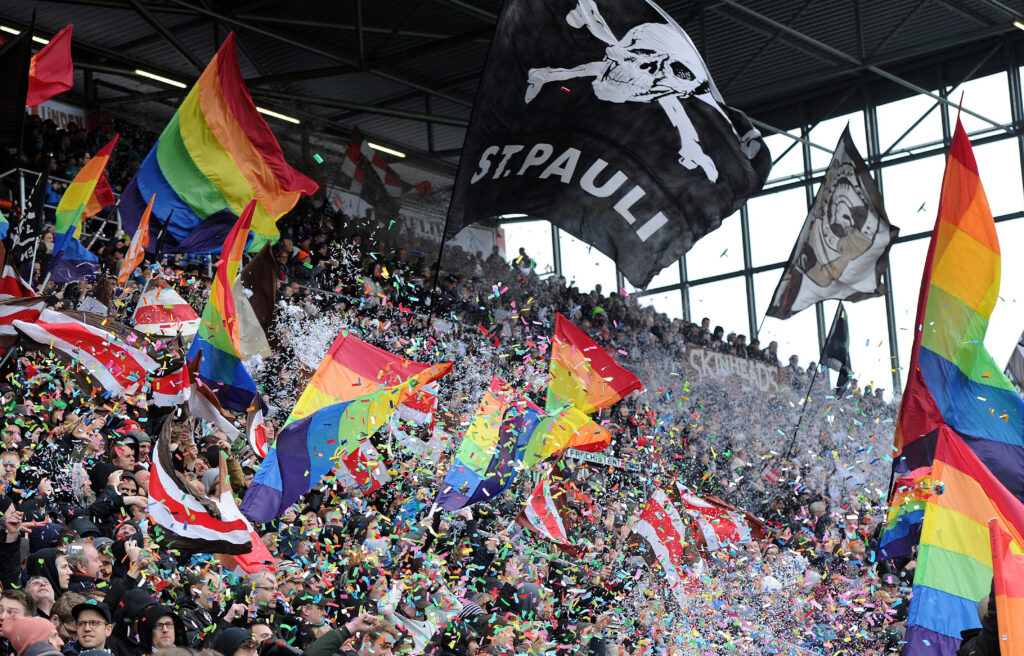
Header image: St Pauli tifo LGBT support (2016) Witters/Tim Groothius. June 2022 marks the 52nd LGBTQ+ Pride month since the ‘holiday’ – initially a celebration and demonstration of proud queer identity that grew out from American marches commemorating the 1969 protests at Stonewall – was adopted worldwide. We’ve talked about LGBTQ+ history in football before (and can now add the cheering editor’s note that in the mere 5 months since that article was written new history has been made, with the second active professional footballer ever in the UK to publicly come out). However, this month, we’re thinking more generally about that concept, “pride”. Most obvious in the context of football is pride in your team. What started as a very simple celebration of community identity – with people generally supporting whatever team they happened to live closest to – has developed into a sophisticated system of costume (scarves, colours, face paint), chants, slang, even literature (with fanzines and their online versions becoming ever more refined and widely read). The symbolism involved can be internationally and instantly recognisable, or subtle enough to be noticed only by those ‘in the know’.  Fans are in control of what they are proud of and how they show it, and show it they do: they gather in groups to publicly protest official choices as happened after the renaming of “Hull City AFC”, or individuals may take existing symbols of team pride and make them entirely their own. The latter was very popularly done by drag queen Bimini, who assembled an outfit to watch their home team, Norwich FC, for a ‘hometown pride’ runway. Of course, it cannot be ignored that like pride itself, there is a negative side to fan culture. Racist and homophobic language, for instance, have historically been loud and widely accepted within the football community. The “hooligan calling cards” of the 70s are an aestheticised window onto the sometimes-lethal lengths to which fans (“fanatics”) would take their team pride. Both these things may well stem partly from football’s specificity as a platform for both national pride and (particularly male) competition, “war without weapons”. However, this is also why it is so important that the game’s potential for identity and community building, as well as emotional release for groups often given little other public outlet, are respected and used for more positive means where possible. Nevertheless, football has a unique ability to provide community and comfort to people – pride in identity and community, the right to be part of a group, to feel good about themselves and have fun – which should not be overshadowed. This includes LGBTQ+ people, with hundreds of queer- and trans-inclusive teams all over the world, but is an idea that can and has expanded to include just about anyone. Women’s football, after being marginalised and actively forbidden for most of the 20th century, has become one of the most progressive and inclusive professional sports in the world (particularly for LGBTQ+ people, in fact). There are grassroots teams specifically for refugees, for newcomers to a given area, for people with disabilities, for older players, and more. Even where groups are not yet included in the mainstream, they can use the worldwide “language” of leagues, team colours, crests, and the game itself to celebrate their identities under their own terms, as demonstrated by CONIFA (the Confederation of Independent Football Associations; “nations, de-facto nations, regions, minority peoples and sports isolated territories” not included in FIFA). Both pride and football have at times been used maliciously, for negative impact. Neither is innocent and neither should be engaged with uncritically, but they can both be powerful tools for togetherness, communication, and joy. We at Alive and Kicking hope that our own work, working with communities around the world, can stand alongside the many people and initiatives briefly mentioned in this article as an exemplar for how we can be proud of and within football. We can both play and celebrate the game and promote inclusive, multifaceted, intersectional pride (and, of course, Pride) not only for ourselves or our teams, but the whole sport and its ever-brighter future. Images sourced with the help of the Design Museum, currently showing ‘Football: Designing The Beautiful Game’ until 29th August, where visitors can see both the Hillsborough Memorial Banner and the Corbin Shaw banner pictured above.

Pride in football Read More »

We are hiring! Lead our exciting new sales offering

Help create happier, healthier more empowered communities by driving the growth of Alive and Kicking’s new sales offering. The Role Historically, AK have sold sports balls in the markets in which they are made. Sales in these regions will continue but increasing global demand for high quality ethical products has led to the exploration of new markets. AK’s global sales have grown organically by over 325% in the last year alone which has shown there is clear potential for significant growth over the coming year. The AK Sales Manager has the opportunity to establish Alive and Kicking as a competitor in both the gift and sports market, driving both partnership engagement and sales. Put simply, the more balls AK sell, the more ethical jobs we can create and the more young people we can give access to sport and vital health education. How to Apply Please read the job pack (downloaded by clicking here) and send your CV and a covering letter (no more than two pages long, addressing how you meet each point on the Person Specification) to applications@aliveandkicking.org by 5.00pm on Monday 11th July 2022. Interviews are planned for the week beginning July 18th and will take place either in person or online. Alive and Kicking reserve the right to close this vacancy early if we receive sufficient applications for the role. Therefore, if you are interested, please submit your application as early as possible. If you have any questions about the role, please call our office on 020 7686 9852 and ask for Ben Sadler. Thank you for your interest in the role and enabling Alive and Kicking to create happier, healthier more empowered communities. Job Pack Download

We are hiring! Lead our exciting new sales offering Read More »

“Vista, le ballon responsable”: football as a force for good in France

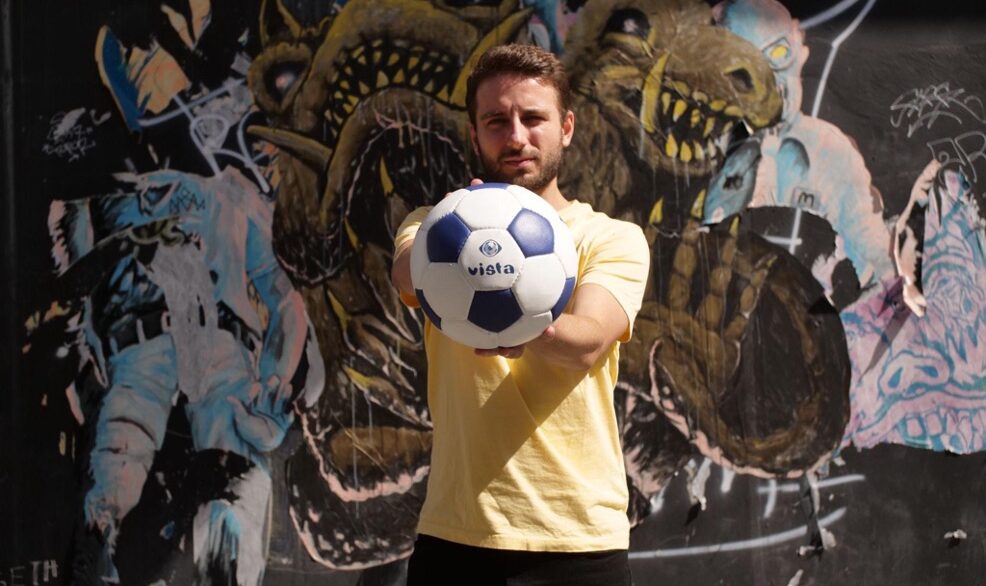
This month we had a chat with Jean-Baptiste de Tourris (not pictured above!), co-founder of Vista and one of Alive and Kicking’s recent collaborators in generating impact throughout the world through football. So, first things first, what is Vista? Vista makes footballs in Marseilles, in the south of France. I would say we have an ambition to give back meaning to football, like Alive and Kicking is doing – it’s a great example for us and a great inspiration. How long has it been going so far? My wife, Agathe, had the idea two years ago. I wanted to buy a responsible football, but there was nothing like that in France. Then we talked to an engineering school near Lyons about making an ecological football with a social impact. We worked for six months on a research project with 12 final-year students, thinking about what is a football, how we can recycle and ecologically produce one. And then 18 months ago, we met with Ben [CEO of Alive and Kicking]. How did that come about? So we got the conclusions from the research project… and the conclusion was that it’s not possible to sustainably eco-produce a football in France. Of course I was very unsatisfied so I wrote – in so many languages, thanks to globalisation – and Googled, and YouTubed; I watched videos from Pakistan, and India, and China, and I found a video of Alive and Kicking on YouTube, explaining what they were doing. And I thought wow, this is something very interesting. I looked on LinkedIn and I added Ben, and I emailed him. Two hours later he replied to me – that’s the beginning of the story! Could you expand a bit on what it is exactly that Alive and Kicking does with Vista? At the beginning we wanted to do everything in France. After we met with Alive and Kicking we tried to make the panels in France but it’s very hard! [laughs] Then we tried just to stitch them in France. But hand-stitching here ended up costing far too much, so we tried to stitch with a machine, but it’s not the same, it’s not as strong. So in the end, Alive and Kicking is doing the first part of the job – stitching 80-90% of the ball, so the body is open leaving 20cm that we stitch in France [after inserting the bladder]. This takes 45 minutes to do, once an employee has been trained for 3 months. Of course in terms of efficiency it’s nonsense, we could stitch the entire ball in Kenya and make a higher profit. But we don’t want to do that, we want to work with Alive and Kicking and we want to create jobs in France. So we have this part and we are very proud of it: it helps people here in Marseilles to find a job and reintegrate into work. There are many factors in measuring environmental impact, but most people think of the carbon footprint. So: a normal football sold in France produces 7kg CO₂. Thanks to the engineering school, we measured this impact for a Vista ball. With full transparency, with the bladder coming from India and body coming from Kenya, and transport to France by plane, we still only have a carbon footprint of 3.2kg CO₂. With higher quantities we will be able to transport by boat, and this will bring the footprint down to 2.3kg, almost a quarter of a classic football. So was the original idea to make a social impact or to be environmentally friendly? Agathe and I work with disabled people; having a social impact is very important to us. At the beginning we didn’t have the environmental part of the idea. But we learned so much from this research project. Maybe because a football is such a common object, as consumers we don’t ask questions: what is a football, where is it made, what becomes of it at the end of its life? We ask questions a lot about food for example, or clothing, so brands have to move. But for footballs we don’t, so brands don’t have the will to change. They have this model, you know, it’s less than 3% for the people working, making the balls, and 30% or more for profit. To my mind, when the customer doesn’t ask for anything, the brands will continue doing what they’re doing. If you want to have a social impact, and if you want to give jobs to people, you can’t do it by creating more waste, more inequalities, or more bad impact on the environment. And the people working have to be happy and have to be proud to work. If you work for a product where the lifetime is like one week and then it’s waste, it’s in the landfill … people don’t connect. Who are the people working with Vista? From the beginning we wanted to work with people currently far from jobs; in France we say “reintegration”, social and work reintegration. We don’t have a lot of funds and we don’t have a big company helping us, so we’ve been working with a group who are authorised by the government under a scheme helping companies to employ people who find it difficult to get work, often due to disabilities. You have two years with these people, part paid by the government, to help them “reintegrate”. After the two years, they will have completed their professional reintegration, and we hope we will be able to give them the option of staying on for a long term job with us. With this group’s help in January we hired Hourik. He comes from Syria, with his family – he has four kids. He was making shoes in Syria, and was then looking for a job in France. He is highly motivated to work and he loves footballs! With Hourik stitching for us we sold almost 500 footballs in one month. Now we want to

“Vista, le ballon responsable”: football as a force for good in France Read More »